
EXERCISE GUIDE
Back Extension
Use a bodyweight hip hinge on a 45-degree Roman chair. Lower at the hips and return with the glutes and hamstrings, stopping when the trunk and legs form one line.
01Muscles used
Main muscles
- Erector spinae (mainly isometric support of the spine)
Assisting & stabilizing muscles
- Gluteus maximus (hip-extension movement)
- Hamstrings (hip-extension movement)
- Abdominals (trunk stability)
Assisting roles include movement support and postural stability. Their contribution varies with form and load.
02See the movement
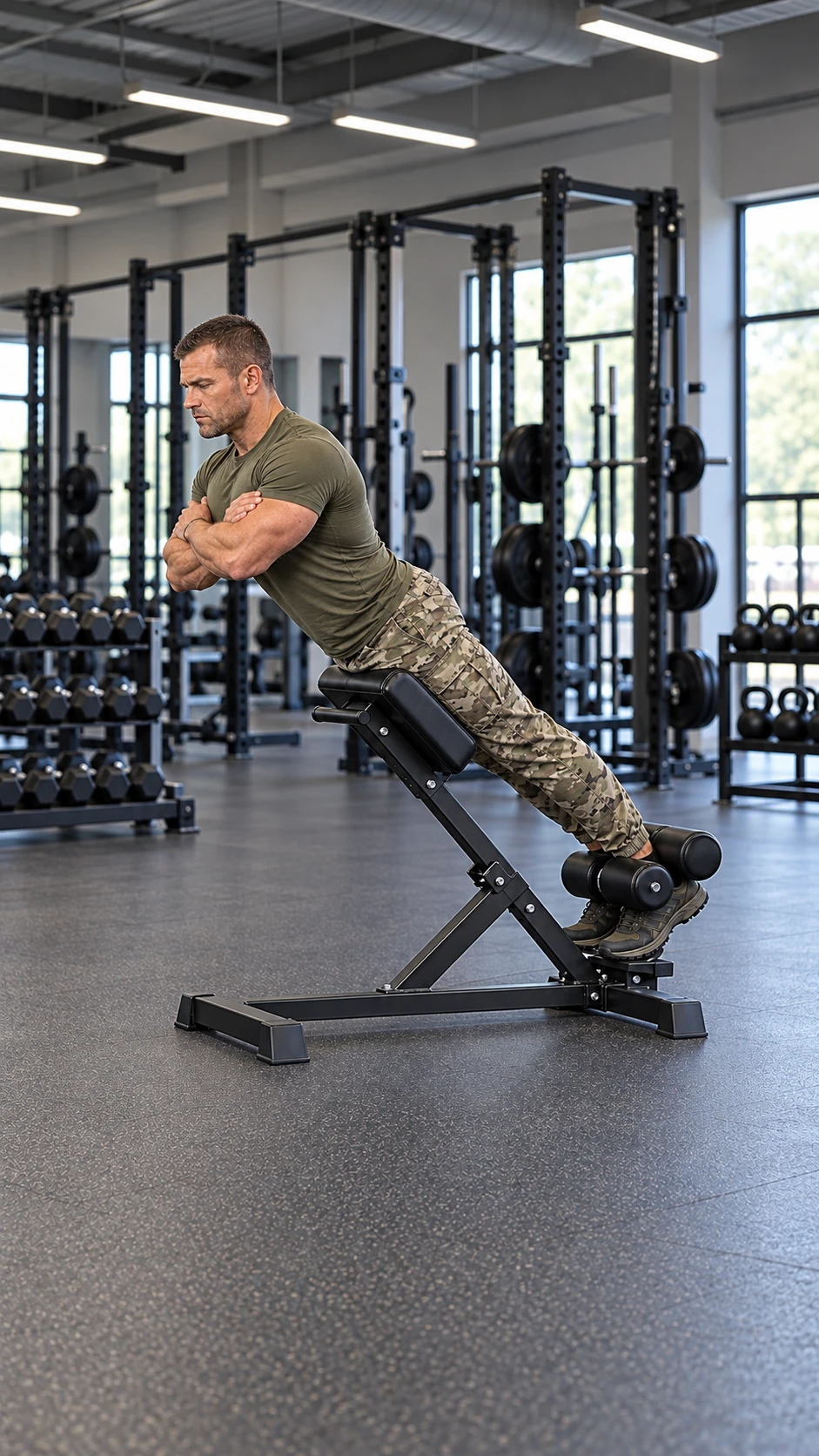
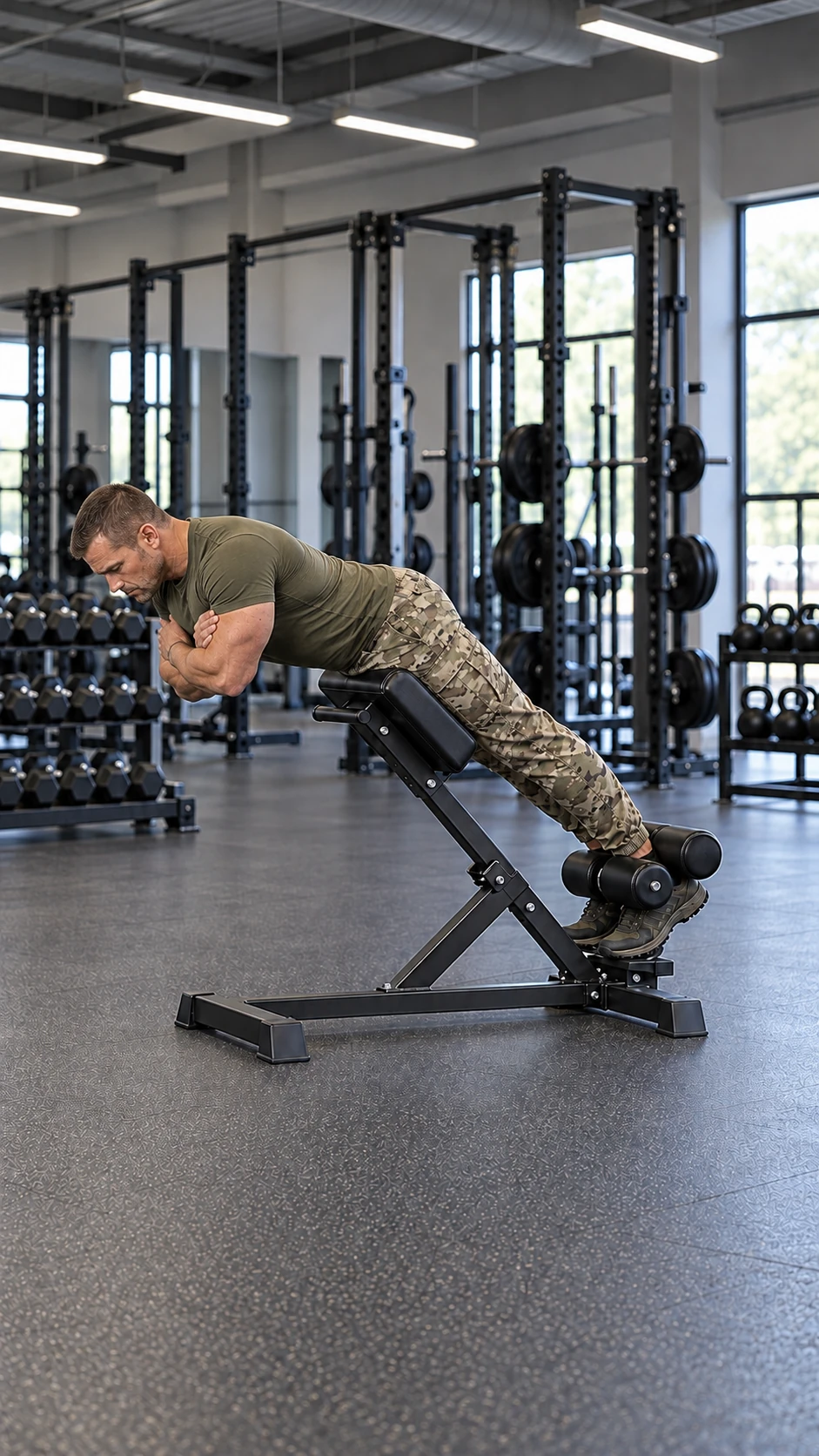
Illustrations are reproduced from the exercise PDF. Select an image to enlarge it.
03How to perform
- Set the pad against the upper thighs below the hip crease. Plant the feet on the footplate, secure the ankles under the rollers and cross the arms over the chest.
- Align the head, trunk and legs, keeping the neck in a natural line with the spine.
- Hinge down slowly at the hips without rounding the lower back. Lower only as far as the neutral spine can be maintained.
- Use the glutes and hamstrings to extend the hips and return smoothly. Stop when the head, trunk and legs are aligned.
04Technique cues
- Move at the hips rather than deliberately bending and arching the lower back.
- Keep the feet secured and upper thighs supported. Brace gently without lifting only the head.
- Keep breathing and control both directions.
05Cautions
- Set the pad low enough to permit a hip hinge without compressing the abdomen.
- Do not arch beyond the straight-line top position or use momentum. Reduce the range before posture changes.
- Stop for lower-back or hip pain. Steady yourself before getting off the bench.